


In streetwear slang, “cop” means to successfully purchase or acquire an item, especially a limited-edition release. You hear it constantly in sneaker forums, Instagram captions, and Discord drop channels. Knowing what does cop mean in streetwear is not just vocabulary trivia. It tells you how the culture thinks about buying, status, and community. This guide breaks down the full meaning, origin, real-world usage, and related terms so you can move through streetwear conversations with confidence.
Where did “cop” come from in streetwear?
The word “cop” did not start in fashion. It traces back to the British term “copper,” meaning to seize or capture. That root gave English the word “cop” as a verb for arrest, which is why police officers became known as cops. The meaning shifted over time in urban communities, where “to cop” started describing any act of grabbing or securing something you wanted.
Streetwear and sneaker culture picked up the term organically. By the early 2000s, forums like NikeTalk and Sneakerheads were full of posts asking “did you cop?” after a Jordan release. The word fit perfectly because buying a limited sneaker genuinely feels like a capture. You are competing against thousands of other buyers, bots, and resellers to grab one pair before they disappear.
Here is how “cop” evolved through distinct phases:
- Urban slang phase: “Cop” meant to grab or acquire anything of value in street vernacular.
- Forum adoption phase: Sneaker communities on NikeTalk and ISS (Integrated Sneaker Syndicate) standardized the term for shoe purchases.
- Social media phase: Instagram and Twitter spread the word to a global streetwear audience.
- Cross-category phase: “Cop” crossed over from sneakers into apparel, accessories, gadgets, and any trendy consumer product.
Pro Tip: If you are new to streetwear spaces, use “cop” only when referring to a completed purchase. Saying “I’m trying to cop” signals intent. Saying “I copped” signals success. The difference matters to the community.
How does “cop” connect to streetwear drops?
The drop model is the engine that makes “cop” so charged with meaning. Drops create artificial scarcity, releasing limited quantities at a set time to drive urgency and hype. Brands like Supreme, Nike, and Adidas have built entire marketing strategies around this model. When a drop goes live, you have minutes or even seconds to complete a purchase before stock sells out.

That pressure transforms buying into a competitive act. “Copping” is not passive shopping. It is a timed challenge with a clear win or loss outcome. Streetwear reviewers consistently stress that “cop” signals actual acquisition, not just the attempt. You either copped or you did not. There is no participation trophy.
Here is the typical sequence of a drop and where “cop” fits in:
- Announcement: A brand teases a release date and product images. The community starts discussing whether to cop or pass.
- Hype build: Influencers, review channels, and forums drive anticipation. “Are you copping?” becomes the dominant question.
- Drop goes live: Stock releases at a specific time. Buyers rush to complete checkout. Bots compete alongside manual buyers.
- Post-drop report: Winners post “I copped!” on social media. Losers post “I missed” or “L on the cop.”
- Resale market activates: Items that sold out immediately appear on StockX, GOAT, and Grailed at inflated prices.
“Drops have changed fashion dynamics, making ‘cop’ a cultural act tied to timing and exclusivity.” — Streetwear Directory
The distinction between trying to cop and actually copping matters deeply in the culture. A successful cop carries social weight. It proves you were fast enough, connected enough, or lucky enough to secure the item. That is why people announce their cops publicly. It is a badge.
Manual copping versus bot copping adds another layer. In collector communities, “manual cop only” is a point of pride. It means you secured the item through your own speed and skill, not through automated software. Some drops explicitly ban bots, and communities celebrate manual wins as more authentic.
How is “cop” actually used in streetwear conversations?
Real-world usage of “cop” spans social media captions, DMs, forum threads, and in-person conversations. The migration from forum shorthand to mainstream social media captions shows how dynamic streetwear language is. Knowing the common phrases helps you read the room and communicate like you belong.
Here are the most common phrases you will encounter:
- “Did you cop?” Asking if someone successfully purchased a specific release. The focus is on outcome, not effort.
- “Cop or drop?” A community poll framing the decision to buy or skip a release. This phrase is standard across sneaker forums and YouTube comment sections.
- “I copped the W.” Combining “cop” with “W” (win) to celebrate a successful purchase, especially after a raffle or high-demand drop.
- “Hard cop.” Emphasizing a strong, confident decision to buy something without hesitation.
- “Soft cop.” Buying something you like but do not love, often because the price was right or the item was easy to get.
- “L on the cop.” Taking a loss, meaning you failed to secure the item during the drop.
Pro Tip: On platforms like Reddit’s r/Sneakers or Grailed, posting “cop or drop?” with a product image is a reliable way to get community feedback before spending money. The responses are usually direct and honest.
Platform context shapes the meaning slightly. On Instagram, “copped” in a caption is a flex. It announces ownership. On Discord drop servers, “cop” is used in real time during a release. “Did anyone cop?” appears within seconds of a drop going live. On StockX or GOAT, the word shifts toward transaction language. Buyers “cop” at ask price, meaning they accept the current lowest asking price to secure the item immediately.
The slang is distinct from its police connotation in this context. Newcomers sometimes hesitate over the word, but inside streetwear and sneaker spaces, the acquisition meaning is universal and unambiguous.
“Cop” vs. other key streetwear slang terms
Understanding “cop” gets sharper when you place it next to the other terms that define streetwear vocabulary. Each word in the lexicon plays a specific role. Together they describe the full lifecycle of a coveted item.
| Term | Meaning | Relationship to “Cop” |
|---|---|---|
| Drop | A scheduled limited release of a product | The event that creates the opportunity to cop |
| Grail | A highly coveted item, often rare or discontinued | The ultimate item you want to cop |
| Resell | Selling a copped item above retail price | What happens after a successful cop if you flip it |
| L (Loss) | Failing to secure an item during a drop | The opposite of a successful cop |
| W (Win) | Successfully securing a drop | Synonymous with copping in outcome terms |
| Hype | The cultural buzz surrounding a release | What makes copping feel urgent and meaningful |
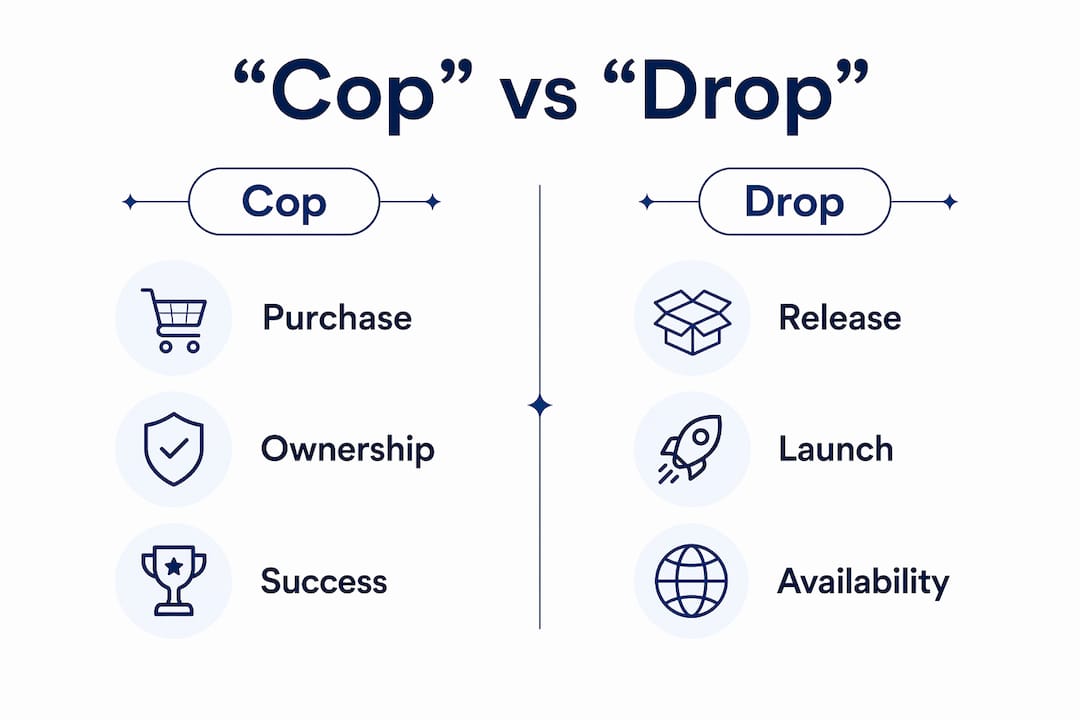
“Drop” and “cop” are the most tightly linked pair. A drop creates the window. Copping is what you do inside that window. Without drops, the urgency behind copping would not exist. Brands like Supreme built their entire identity on weekly Thursday drops that trained a global audience to act fast or miss out.
“Grail” adds an emotional dimension. You might cop dozens of releases in a year, but your grail is the one you have been chasing for years. Copping your grail is the peak experience in sneaker collecting. It is the reason people set alarms at 3 a.m. for international drops or pay three times retail on StockX.
“Resell” shows the economic side of copping. Some buyers cop specifically to flip. They treat drops like a market, using tools like Sneaker News and Kick Game to track resale value before a release even drops. Others cop strictly to wear and consider resellers a problem. This tension is one of the defining debates in streetwear culture.
Key takeaways
“Cop” in streetwear is a success verb. It describes a completed purchase of a limited or coveted item, not just the attempt.
| Point | Details |
|---|---|
| Core definition | “Cop” means to successfully buy or acquire a streetwear or sneaker item. |
| Cultural origin | The term evolved from British slang meaning “to seize,” adopted through urban communities into fashion. |
| Drop connection | Drops create scarcity and urgency, making every cop a competitive, time-sensitive act. |
| Social signal | Announcing a cop publicly is a status move. It signals speed, access, and taste. |
| Related vocabulary | Terms like “drop,” “grail,” and “resell” form the full lexicon around copping. |
Why “cop” is more than just buying something
I have spent years watching streetwear language evolve, and “cop” is the word that tells you the most about how this culture actually works. It is not a synonym for “buy.” It carries weight that a neutral word like “purchase” never could.
When someone says they copped a pair of Off-White x Nike Air Jordan 1s, they are not just reporting a transaction. They are telling you they were fast, they were prepared, and they had the taste to want that item in the first place. The word compresses all of that into one syllable.
What I find most telling is how the community uses the word’s absence. Nobody says “I copped” when they buy a basic tee from a mall brand. The word only appears when the item carries cultural weight. That self-selection is the real definition. “Cop” marks the boundary between ordinary shopping and participation in streetwear culture.
The rise of bots has complicated this. When automated software can cop thousands of pairs in seconds, the achievement behind the word gets diluted. That is exactly why “manual cop only” has become a point of pride in serious collector circles. It is the community protecting the meaning of the word itself.
If you are building your presence in streetwear spaces, learn the language before you try to speak it. Using “cop” correctly signals that you understand the culture, not just the clothes. That credibility opens doors that money alone cannot.
— Cedrick
Ready to cop something worth talking about?
Knowing the language is step one. Finding pieces worth copping is step two. Iisyndicate built the InnoInspo collection for exactly this moment. These are not mass-produced basics. They are culture-driven pieces designed for people who understand what it means to cop something with intention.
Iisyndicate blends music, apparel, visuals, and design into releases that carry real creative weight. If you want to wear something that reflects the culture you are part of, browse the full collection and find your next cop. Built to innovate. Made to inspire.
FAQ
What does “cop” mean in streetwear?
“Cop” means to successfully buy or acquire a streetwear or sneaker item, especially a limited release. It signals a completed purchase, not just an attempt.
What is the difference between “cop” and “drop” in streetwear slang?
A “drop” is the scheduled release event. To “cop” is the act of successfully purchasing during that event. One is the opportunity; the other is the outcome.
What does “cop or drop” mean in sneaker culture?
“Cop or drop” frames the decision to buy or skip a release. It is a common phrase in sneaker forums and social media comment sections when a new product drops.
Does “cop” only apply to sneakers?
No. “Cop” applies broadly across streetwear apparel, accessories, gadgets, and any trendy consumer product. It started in sneaker culture but now covers the full streetwear category.
What does “manual cop” mean?
A “manual cop” means purchasing a limited item through your own speed and effort, without using automated bot software. In collector communities, it is considered the more authentic way to secure a drop.
0 comments